Appointment-only is an access condition, not a warning: a useful directory record should explain what a visitor can request, where a meeting begins and who will confirm the arrangements.
Many club archives and community sports collections are cared for in rooms that are not staffed every day. Their records should neither disguise that fact nor make the collection sound closed. A concise access note can set a realistic expectation while still inviting a serious enquiry.
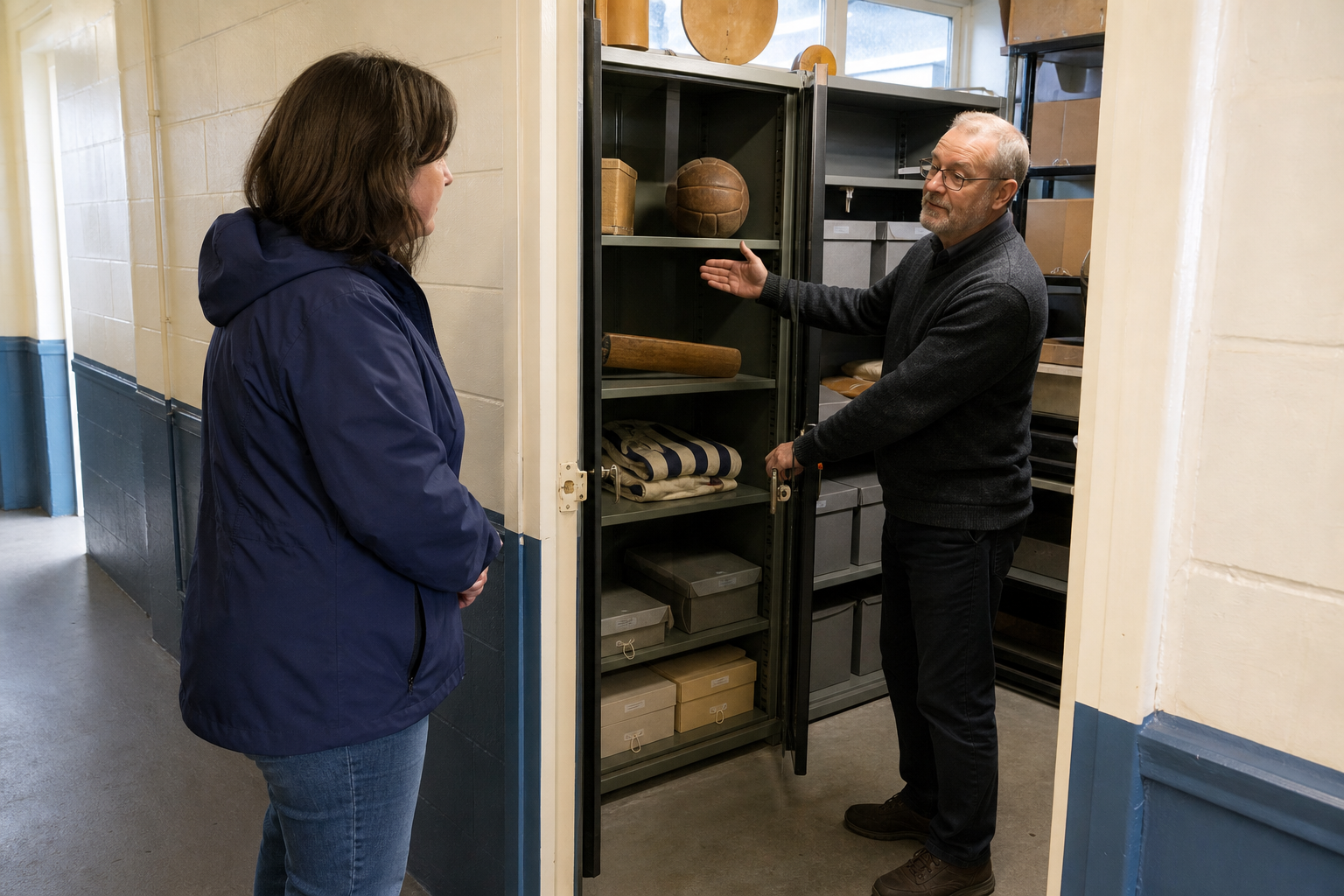 The visitor waits at the agreed meeting point while a volunteer opens the secure store and prepares the requested sporting material.
Put the access status where a visitor will see it
The first practical sentence should say whether research visits are available by prior appointment, limited to occasional open days or temporarily restricted to remote enquiries. Do not leave the reader to infer this from a general venue page or from opening hours that belong to another part of the building.
“Research access by prior arrangement” is often enough when it is followed by a current contact route. It does not promise a public gallery, reception desk or fixed weekly timetable. It tells a prospective visitor that a request will be considered and that the collection will confirm what can be prepared.
The National Archives explains that services can manage who accesses archives and when without imposing unnecessary restriction, and that original material may need supervised handling. Its guidance on providing access to archives supports a plain statement of the arrangement rather than a vague claim that the collection is open.
Describe a visit without exposing the store
A useful record names the broad material that can be requested: for example, match programmes from a stated period, club minutes, team photographs, oral-history recordings, trophies or kit associated with a particular ground. It should not imply that every box is catalogued or that every object can be handled.
The Collections Trust standard for use of collections asks organisations to consider users, methods of access and any legal, ethical, condition or hazard limits. In a directory entry, that can be expressed briefly: identify the scope, mention a material restriction when it affects access, and say what alternative may be offered.
The public meeting point need not reveal the location of a secure store. Give the town, club venue or reception point that helps someone plan the journey; send detailed arrival instructions only after the appointment is accepted. The same reply can confirm the usable entrance, seating, lighting or other access needs raised by the visitor.
The image accompanying this feature makes that boundary concrete. A researcher remains in the corridor while a volunteer unlocks a cabinet containing archive boxes and sporting objects. It represents controlled, welcoming access to prepared material, not an unattended room or a permanently open exhibition.
Ask for a request the volunteer can answer
“I would like to see the archive” can be difficult for a volunteer to assess. A better enquiry gives a subject, team, person, date range or object type and briefly explains the purpose of the visit. That information lets the collection check whether relevant material exists and how much can safely be made ready.
Publish one current contact route and ask for only the details needed to respond: the research topic, preferred dates and any access requirements. There is no need to expose a private telephone number or promise a response time the organisation cannot consistently meet.
A researcher can first use the National Sports Museum Online sporting collections directory to narrow the enquiry. A nearby or more specialised collection may be a better match, and a focused request saves time for both the visitor and the volunteer.
Keep the access note current without rewriting the history
Add a “details checked” date and name the responsible role, such as club secretary, archive volunteer or collections team. Review the note when the contact route, meeting point or availability changes. The stable history of the collection can remain untouched unless new evidence requires an amendment.
The 2025 Archive Service Accreditation guidance says access arrangements and restrictions should be easy to understand and appropriate to a service’s mission, nature and scale. That principle fits a small volunteer collection as well as a staffed archive.
The Collections Trust’s guidance for an access policy covers how people see and use collections, enter sites and obtain information about holdings. A directory entry is not the whole policy, but it should present the few facts a visitor needs before making contact.
An appointment-only collection does not need to apologise for limited hours. It needs an honest route from interest to a confirmed visit: current status, relevant holdings, a safe meeting point, an answerable request and a review date. Clubs, archives and community groups can add or update a collection record with those details.
This page was added on 6 September 2026.
